
As the EU’s Carbon Border Adjustment Mechanism (CBAM) reshapes global trade dynamics, MENA exporters face a defining moment. What began as a regulatory requirement has evolved into a competitive differentiator, one that rewards low-carbon production and penalizes carbon-intensive processes. For manufacturers and exporters across the region, the question is no longer whether to prepare for CBAM, but how to leverage MENA’s unique advantages to turn compliance into market leadership.
The MENA region stands at a strategic crossroads, equipped with inherent strengths that position it not just to meet CBAM requirements but to excel under them. From world-leading renewable energy costs to pioneering green hydrogen projects and advanced CCUS infrastructure, MENA has built the foundation for low-carbon industrial competitiveness. The challenge now is translating these regional advantages into actionable strategies that reduce embedded emissions, lower CBAM-related costs, and secure preferential access to European markets.
In this article, the Ecoryx team shares five key factors that position the MENA region to thrive in the era of CBAM.
1. Abundant and Low-Cost Renewable Energy
The MENA region is rapidly accelerating its clean energy transition, delivering some of the world’s largest solar and wind projects and achieving remarkable milestones along the way. With abundant sunlight and strong winds, the region is uniquely positioned at the forefront of global renewable energy development.
In 2025, equipped with advanced solar technologies and large-scale deployment models, MENA set a global record for the lowest solar LCOE at US$37/MWh, cheaper than fossil fuel alternatives. This makes the transition to green energy not a trade-off, but a strategic economic choice.
Beyond natural resource advantages, the momentum is reinforced by supportive government policies, strong public-private partnerships, and rapid adoption of advanced technologies. Projections indicate 75 GW of solar capacity and 131 GW of total renewable energy by 2030, positioning MENA as a global clean energy leader.
How This Powers CBAM Compliance
In CBAM-covered sectors, electricity often represents a major share of emissions, making low-carbon power crucial. Under the EU’s CBAM, MENA’s abundant low-cost clean electricity gives exporters a strategic advantage. By powering energy-intensive industries like aluminum, cement, steel, and fertilizers with clean electricity, companies can cut Scope 2 emissions, reduce CBAM related costs, and improve access to European markets.
2. MENA’s Green Hydrogen Potential: Driving Low-Carbon Industrial Leadership
In its latest publication, IRENA’s analysis, “The Potential for Green Hydrogen and Related Commodities Trade,” projects that by 2050, MENA will become a major exporter of green hydrogen and its derivatives, with Europe as the primary importer. By 2030, the region aims to produce 10 Mtpa of hydrogen, predominantly green, led by Saudi Arabia with 4 Mtpa.
The GCC, especially Saudi Arabia and the UAE, is investing heavily in solar infrastructure to produce green hydrogen and ammonia. Leveraging existing oil and gas infrastructure, government and sovereign fund support, and export-focused strategies, these countries are securing premium off-takers. Flagship projects include Saudi Arabia’s NEOM Green Hydrogen Project, the world’s largest utility-scale, commercially based hydrogen facility powered entirely by renewable energy.
In Africa, Morocco and Egypt are emerging as strategic export hubs, with abundant solar resources, proximity to Europe, and pipelines supporting large-scale low-carbon hydrogen production.
How This Powers CBAM Compliance
By substituting fossil-based fuels with green hydrogen in steel, ammonia, and other industrial processes, companies can produce low-carbon products that meet EU carbon accounting requirements. This not only minimizes CBAM-related costs but also strengthens access to European markets, where compliance with carbon standards is increasingly required.
3. MENA’s Potential in the Global Green Iron and Steel Market
The MENA region is uniquely positioned to lead the global transition to green iron and steel. In 2023, it produced 61 million tonnes of gas-based direct reduced iron (DRI), accounting for about 45% of global output, with capacity continuing to grow. This leadership is supported by widespread use of DRI–EAF technology, which emits far less than traditional coal-based blast furnaces and provides a clear path for decarbonization.
Access to raw materials further strengthens the region’s position, with Oman and Bahrain supplying reliable, expanding quantities of high-quality iron ore concentrates and pellets, while other regions face feedstock constraints. Combined with accelerating renewable energy deployment and scaling green hydrogen production, MENA’s steel industry is well placed to transition to low-carbon production and meet growing global demand for green steel.
How This Powers CBAM Compliance
Under the EU’s CBAM, MENA’s low-carbon iron and steel production offers a strategic trade advantage. Widespread DRI-EAF technology lowers embedded emissions, reducing CBAM-related costs and supporting access to European markets. This positions MENA producers to market competitive green steel, transforming industrial strengths into long-term export advantages.
4. MENA’s CCUS Infrastructure: A Key Enabler for Manufacturers and Exporters
In the MENA region, the GCC leads CCUS deployment, benefiting from vast geological storage in depleted oil and gas reservoirs, decades of CO₂ pipeline infrastructure, deep technical expertise, and strong government support. In terms of storage availability, quality, and scale, the region rivals the world’s leading CCUS hubs.
This advantage is already in action, with operational facilities such as Uthmaniyah in Saudi Arabia, Emirates Steel in the UAE, and Ras Laffan LNG in Qatar among the projects contributing to MENA’s share of approximately 10% of global CO₂ capture capacity. Looking ahead, ambitious regional and national expansion targets, supported by CCUS roadmaps, enabling regulations, and shared infrastructure, position the technology as a cornerstone for industrial decarbonization and a critical enabler of competitive, low-carbon exports from MENA.
How This Powers CBAM Compliance
CCUS enables companies to capture CO₂, directly reducing Scope 1, and in some cases Scope 2, emissions, lowering CBAM-related costs. In cement and other CBAM-covered sectors, where emissions arise from fuel use and chemical processes, CCUS reduces the carbon footprint of exports. This allows MENA manufacturers to meet EU standards and leverage low-carbon production as a competitive advantage.
5. Geographic Proximity as a Competitive Advantage
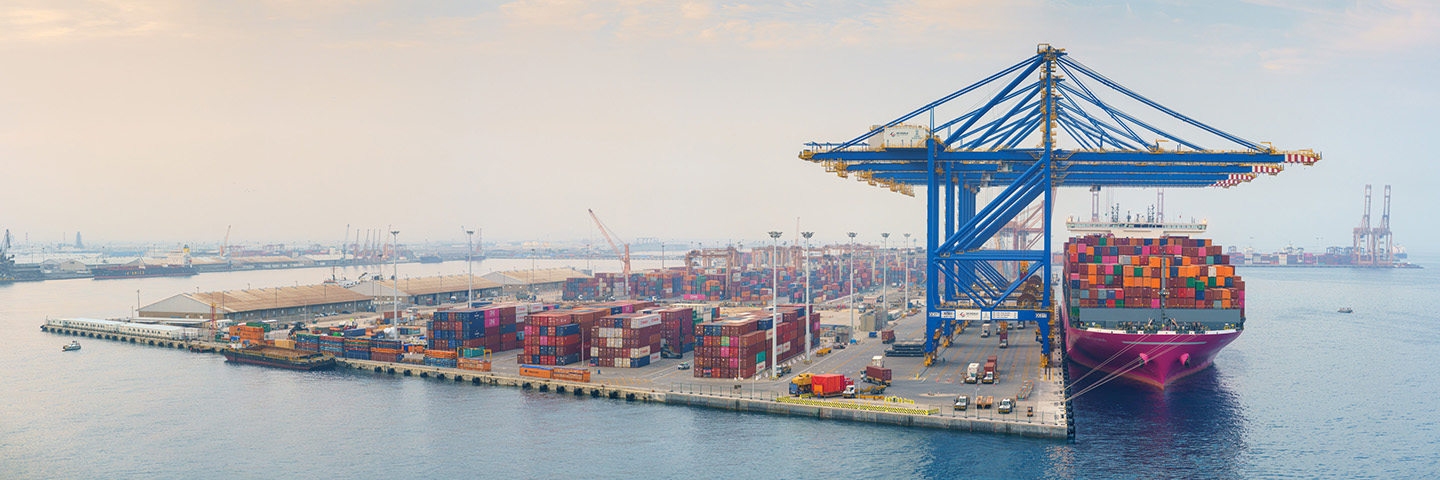
MENA’s geographic proximity to Europe provides exporters with a structural advantage under increasingly carbon-sensitive trade regimes such as CBAM. Shorter shipping distances reduce transport-related emissions, logistics costs, and delivery times, which are factors that directly influence the embedded carbon intensity of exported goods.
Projects and initiatives such as Saudi Arabia’s integrated logistics strategy, Egypt’s Suez Canal Economic Zone, and Morocco’s Tangier Med Port are strengthening export corridors to EU markets. In parallel, planned hydrogen and CO₂ transport corridors linking North Africa and Southern Europe further enhance MENA’s role as a low-carbon industrial partner. Together, location, infrastructure investment, and policy alignment position MENA as a preferred supplier for Europe’s transition-ready value chains.
How This Powers CBAM Compliance
While transport emissions are not currently included under CBAM, which focuses on embedded Scope 1 and Scope 2 emissions, geographic proximity still matters. Shorter supply chains reduce logistics-related emissions relevant to EU buyers’ Scope 3 targets and enhance overall product carbon performance. As EU climate policy evolves, this positions MENA exporters to remain competitive and future-proof their access to European markets.
How Ecoryx Empowers Your CBAM Journey
For MENA exporters and manufacturers, CBAM is not a compliance challenge, it’s a market opportunity. With clean power, CCUS, low-carbon industrial processes, and proximity to Europe, the region has all the building blocks to compete in a carbon-constrained world. Those who act early can turn decarbonization into differentiation and secure their place in Europe’s future supply chains.
At Ecoryx, we help MENA manufacturers and exporters transform CBAM from a compliance obligation into a strategic advantage. Our end-to-end CBAM readiness services guide you through every stage, from accurate emissions calculation and quarterly reporting to decarbonization roadmaps that leverage the region’s clean energy infrastructure, CCUS capabilities, and low-carbon production pathways.
Whether you’re navigating complex carbon accounting requirements, optimizing your supply chain’s embedded emissions, or positioning your products as preferred low-carbon alternatives in European markets, Ecoryx provides the local expertise and technical precision needed to succeed. We don’t just help you comply; we empower you to compete, ensuring your organization captures the full value of MENA’s natural advantages in the new era of carbon-conscious trade.
Leave a Reply